Wednesday, February 14, 2018

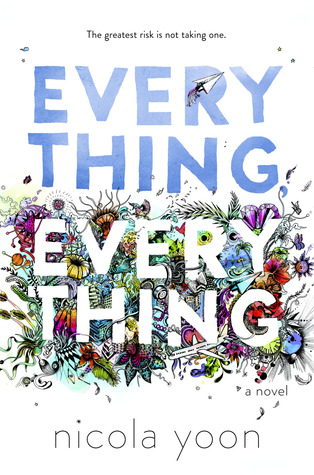
Everything Everything & The Sun is Also a Star


Loved these two books! I'm choosing to review them together because they share similar themes, and I reach them back to back in about three days. Such great YA romances. They've been on my shelf for a while, and I finally decided to pick one up as an easy read while I wait for some library holds to come in. 

First, Everything Everything, which I read first, and I am glad I did, because it's my less favorite of the two. Everything Everything (Everything Squared?) centers on Madeline, the girl living in a bubble, allergic to the world. There's a lot in this book that's relatively formulaic for YA romance - two adolescents, love at first sight grows despite significant barriers, lots of witty banter and impressive teenaged vocabulary, a few twists and turns. That being said, I still really enjoyed it. The story is interspersed with little drawings and diagrams, which I thought were super cute and made the book feel a little more original, and helped to balance out some of the heavier themes of what makes life meaningful, and what we do for the sake of love and family. If you loved The Fault in Our Stars (which I did), you'll like (hopefully love!) this book. 

Which of course, I did enough to immediately move onto Yoon's second book, The Sun Is Also A Star, which I loved EVEN MORE than Everything Everything. This books features all new characters, but rather than tackling illness, it tackles immigration and deportation, features two protagonists of color, and is deepened by the alternating perspectives of those characters, rather than just being told from one side of the story. I fell in love with Natasha - her tough demeanor, her taste in music, her rational and scientific view of the world... she's exactly the kind of teen girl I want to read about. Yoon expands her style here, too; in exploring the theme of cause and effect, she includes vignettes from characters that cross the paths of our two main characters, in ways that trace back to our heroes and their journey together. Although there were a few threads that were a bit of a stretch, I was invested enough in the story to buy into these interconnections, however tenuous. Because who hasn't wondered - what if I had turned left instead of right? What if I had answered that phone call, or taken that trip, or whatever the thing is that lead down the alternate path? That's what makes it such a compelling narrative device, albeit one that is easy to abuse or misuse. In this case, I'm a believer, and will from now on look forward to reading just about anything that Yoon publishes. 

Everything Everything, 4/5 stars

The Sun Is Also a Star, 5/5 stars


Tuesday, February 13, 2018

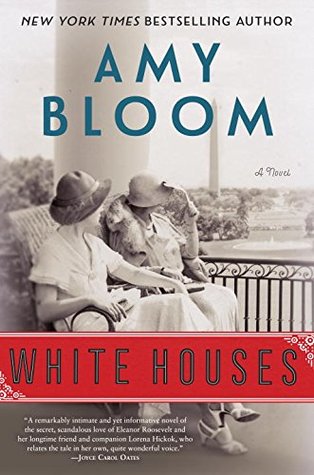
White Houses


Thank you Random House for the opportunity to read White Houses before it's publication date. As a fan of Eleanor Roosevelt's, I jumped at the chance to read this novelization of her love affair with Lorena Hickok, a well know journalist who evenutally moved into the White House as the "first friend." I had a vague awareness that Eleanor had been know to have female partners, but was not familiar with the details of her love life outside of her marriage to FDR. And I wanted to love this book - however, it left me wanting. 

White Houses is told from the perspective of Lorena, or Hick, as she is known, as she comes to comfort Eleanor in the days after FDR's death. Hick's experience of the present moment is interwoven with her memories of her childhood (abusive, neglectful) and her early relationship with Eleanor (passionate, largely accepted) and their eventual undoing. There are some fantastic quotes from Eleanor ("the function of democratic living is not to lower standards but to raise those that have been too low") and some juicy, heartbreaking, but ultimately not surprising tidbits about FDR's own extramarital romances, but ultimately I could not get deeply invested in the characters, however well-known or familiar they may be. Everything about the book carried the feeling of misty, water-colored memories, but perhaps because of that, made it difficult to connect with. There were a few standout moments of romance though, and one of the strengths of the book is the passion between Eleanor and Hick, and the ways in which Bloom describes the beauty of two middle aged women coming together in love, which I've not often encountered in my reading - not necessarily the sexualized part, but just the idea of seeing an aged woman's body as beautiful and sensual - that was powerful. 

Overall, a sweet read, but not one I'd likely revisit... although, maybe I'd see it differently after a more biographically focused book about Eleanor to fill in some of the space in her public life. 

3/5 stars. 


Little Fires Everywhere


(It came, over and over, down to this: What made someone a mother? Was it biology alone, or was it love?)

I'm not sure if there was a more loved book in 2017 than Little Fires Everywhere. It had been on my to-read list for some time, but the stars aligned in January as the new book club I discovered (yay!) picked it as February's to-read right at the time that my hold was finally coming due from the library. That plus a long plane flight gave me ample time to settle in to the story. 

Little Fires Everywhere an enjoyable read, and likely one that gains depth and nuance with each retelling. Ng explores the areas of tension that arise when two family's paths cross - the messy spaces where structure and planning collide with an artist's wandering natures, where teenagers fall in love and lust, and where secrets are created and unearthed in surprising ways. More than anything, what I loved about this book was the exploration of what it means to be a mother, and to be mothered - and of course, there's no clear answer, but Ng does an incredible job of drawing out the various relationships, always with love and complexity. This is the kind of book where it's truly the characters driving the action, and not the action driving the characters. I especially loved the relationship between Izzy and her mother - which I won't go into detail about why, because I cannot do it justice the way Ng does. 

My biggest piece of critique is the storyline of Mirabelle, who is introduced in the beginning and then her thread is dropped until it picks up speed again (and fast) in the last third of the book, where it felt a little jarring to me. I had actually forgotten about her and had to take a beat to remember who was being reintroduced and why. Other than that, this was a lovely read, and I'm very  much looking forward to discussing it in depth at book club next week!


4/5 stars.